|
Jyotiṣa · Planetary Wisdom
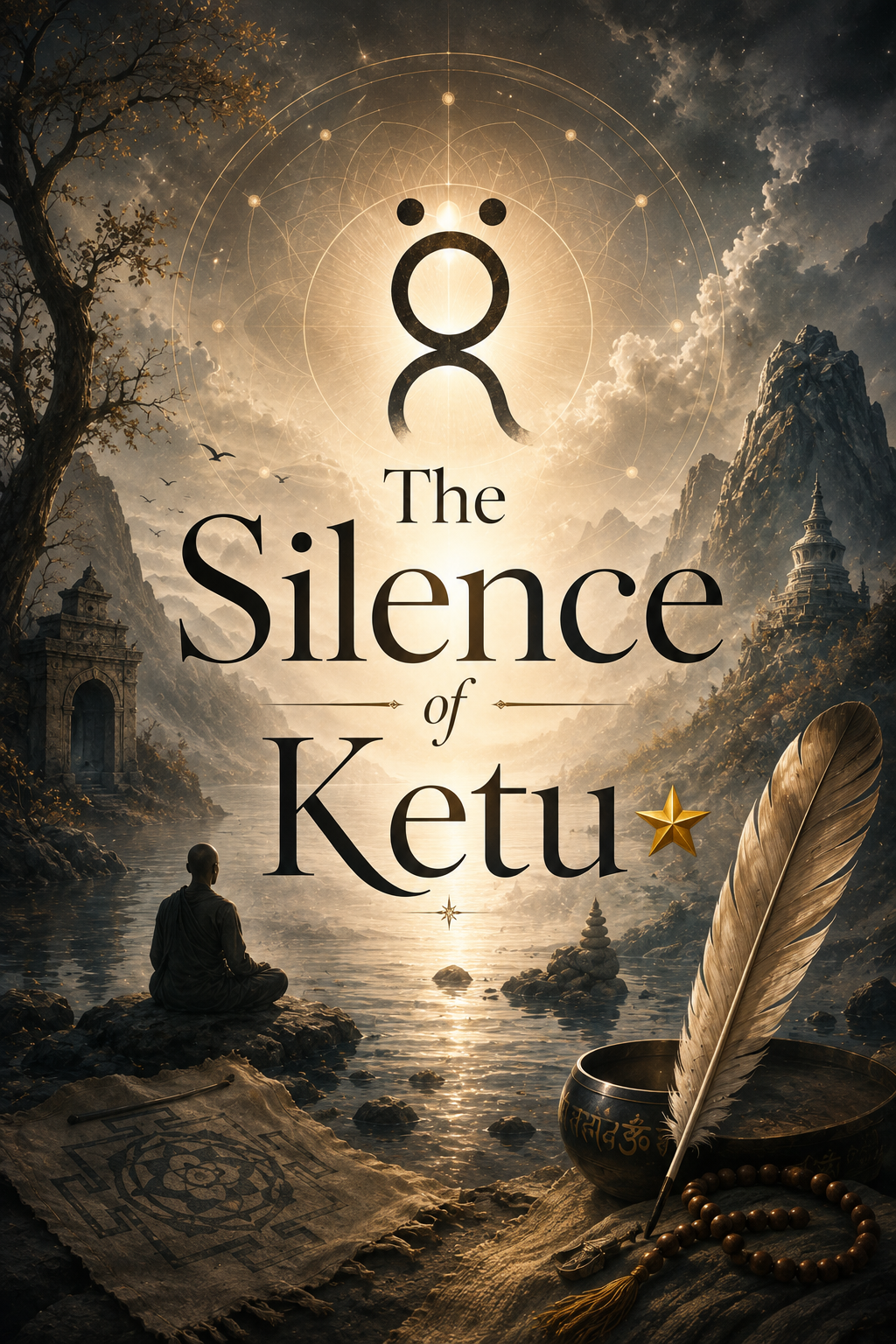
Ketu: The Silence of Completion
The freedom that begins where identity ends
|
People fear Ketu. They call it loss, detachment, confusion, spirituality, past-life karma. All of these are true — yet none of them explain Ketu. Ketu is not the planet of loss. Ketu is the planet of completion.
|
Rahu says, “Become more.” Ketu whispers, “You already have.” The entire dance between Rahu and Ketu is the dance between desire and freedom. |
Ketu is the intelligence that removes everything you no longer need to become who you truly are. It is not interested in building your life — it is interested in revealing what remains when everything unnecessary disappears.
|
||||||
Imagine a master musician who no longer thinks about notes — music simply flows. Imagine a surgeon whose hands move before thought. Imagine a monk with nothing to prove, nothing to defend, nothing to possess. That is Ketu. It governs mastery that has become instinct.
|
|
A strong Ketu is not antisocial. It is deeply free.
|
1. Nothing to prove. — Recognition becomes optional. Praise is pleasant, criticism is informative — neither defines the person. |
|
2. Extraordinary concentration. — Ketu removes distractions. When absorbed, hours disappear and only the work remains. |
|
3. Deep intuition. — Ketu often knows before logic arrives. It doesn’t guess — it recognizes. |
|
4. Simplicity. — Not poverty. Owning what serves, letting go of what doesn’t. |
|
5. Quiet confidence. — The loudest person in the room rarely has strong Ketu. Strong Ketu speaks when necessary; silence becomes powerful. |
|
The Shadow Ketu
An imbalanced Ketu can manifest as isolation, escapism, cynicism, emotional numbness, confusion about purpose, chronic dissatisfaction, spiritual superiority, fear of relationships, running away instead of letting go, and rejecting the world instead of understanding it. Healthy detachment is freedom. Unhealthy detachment is avoidance. |
Each sign shows a different area where the soul has already mastered its lessons — and where transcendence, not accumulation, is the path.
|
|
||
|
|
||
|
|
||
|
|
||
|
|
||
|
|
|
Ketu removes before it gives. People pray for blessings. Ketu first removes clutter — then the blessing becomes visible. |
|
Ketu doesn’t care about titles. Degrees, awards, followers, status — Ketu asks, “Who are you without them?” |
|
Ketu loves masters, not experts. An expert explains. A master embodies. Ketu is effortless excellence. |
|
Ketu is the planet of invisible genius. Many gifted people underestimate themselves because what is effortless to them appears difficult to everyone else. That effortless mastery often carries Ketu’s signature. |
|
Sit in silence. — Five minutes. No phone, no music, no agenda. Just observe. |
|
Own less. — Every month, remove one unnecessary possession. Lightness creates clarity. |
|
Finish before beginning. — Ketu respects completion. Close old chapters before opening new ones. |
|
Practice anonymous kindness. — Help someone, tell no one. The ego receives nothing; the soul receives everything. |
|
Spend time in nature. — Mountains, forests, open skies. Nature teaches without speaking. |
|
Meditate daily. — Even briefly. Ketu grows in stillness. |
|
Learn to be alone. — Loneliness says, “I have nobody.” Solitude says, “I have myself.” Ketu transforms one into the other. |
|
|
Ketu governs the subconscious, hidden disorders, sudden sensitivities, psychic overload, meditation, dissociation, and deep healing after release. The body often mirrors what the mind refuses to let go of — sometimes healing begins with surrender, not struggle.
| • Practice silent meditation daily. |
| • Chant “Om Ketave Namaḥ” with attention rather than mechanical repetition. |
| • Read texts that encourage direct self-inquiry rather than blind belief. |
| • Spend time in sacred places without asking for anything. |
| • Offer food to stray animals or support those who are often overlooked. |
| • Observe one period each week with reduced digital stimulation to quiet the senses. |
The highest offering to Ketu is an uncluttered mind.
|
Living Ketu Every Day
The most powerful way to strengthen Ketu is not by escaping the world. It is by reducing unnecessary attachment while remaining fully responsible:
Freedom grows every time attachment shrinks. |
|
Things That Quietly Weaken Ketu
|
||||||||||
Ask yourself every evening:
| 1. Did I let go of one unnecessary attachment today? |
| 2. Did I spend time in silence without seeking distraction? |
| 3. Did I act from inner conviction rather than the need for approval? |
| 4. Did I complete something instead of endlessly starting new things? |
| 5. Did I help someone without expecting recognition? |
| 6. Did I make space — in my mind, home, or schedule — for what truly matters? |
| 7. Did I remember that who I am is greater than what I own, achieve, or display? |
A strong Ketu is not measured by how much you have renounced. It is measured by how free you remain while fully participating in life.
|
The Ketu Mantra “Let go without running away. Be silent without withdrawing. Master life so completely that you no longer need to prove you have mastered it.” |
Leave a Reply